
 E-mail :
 Call Us :
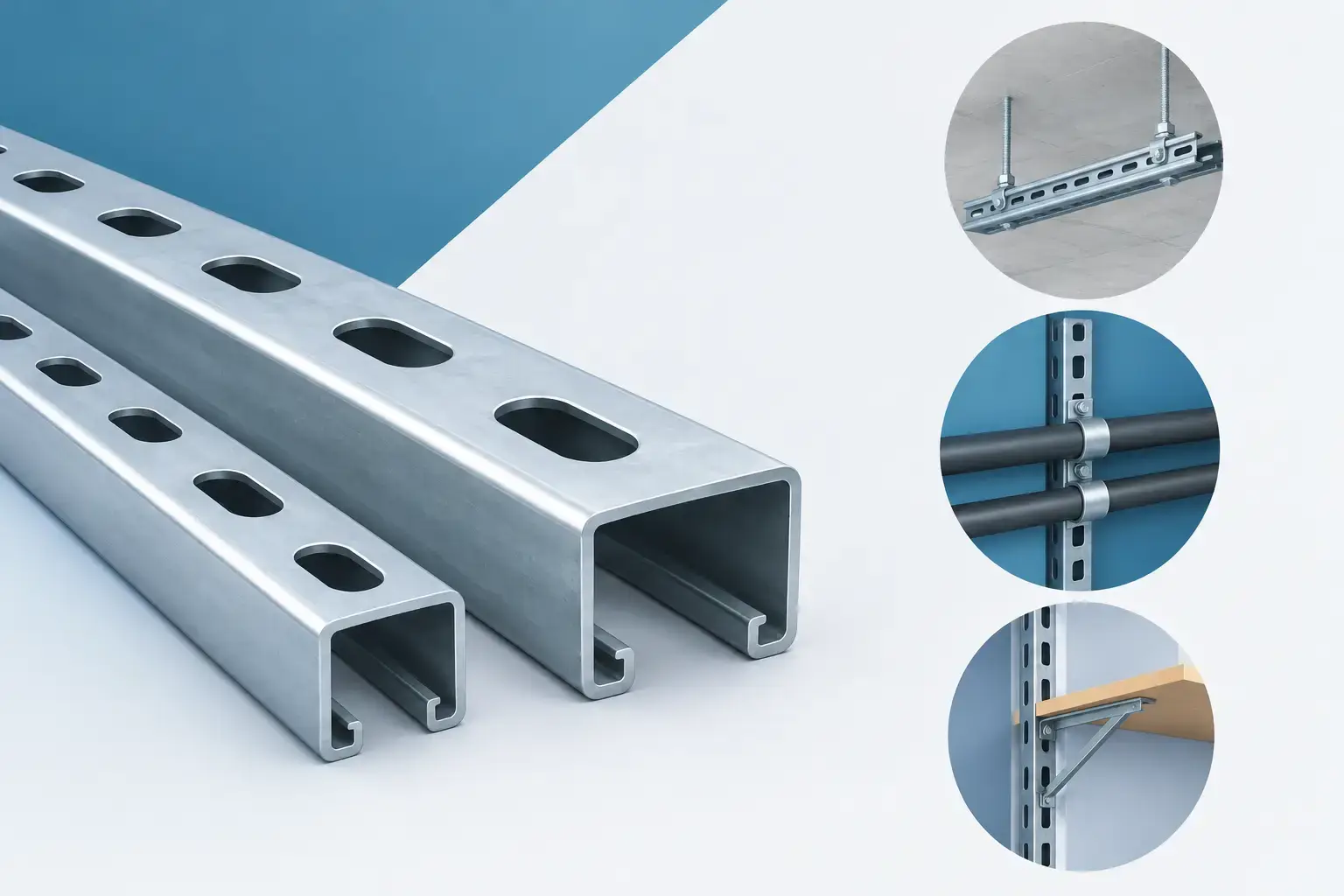
A uni strut deep channel is often selected when a standard shallow framing member does not provide enough section strength, connection space, or rigidity for the installation. For electrical supports, HVAC racks, pipe runs, equipment frames, and industrial bracing, channel depth directly affects how the system performs under real field loads. The right choice is not simply the deepest channel available. It is the channel profile, material, finish, fittings, and support spacing that work together to meet the project requirement.
For procurement teams and engineers, specifying the correct deep strut channel early can prevent common issues later: excessive deflection, incompatible fittings, insufficient clearance around services, rework during installation, and avoidable schedule pressure.
What Defines a Uni Strut Deep Channel?
“Uni strut” is commonly used in the field to describe slotted metal framing systems and compatible channels. A deep channel is a strut profile with greater vertical section depth than a shallow or low-profile channel. That additional depth increases the distance between the top and bottom of the section, improving resistance to bending when the channel is loaded in its strong axis.
Deep channels are typically used where longer spans, heavier service loads, cantilevered brackets, or multi-tier support assemblies are required. They may be solid or continuously slotted, depending on the connection method and application. Slotted profiles offer flexible positioning for spring nuts, bolts, clamps, and brackets. Solid profiles can be preferred where maximum section continuity, cleaner appearance, or specific installation methods are needed.
Channel width matters as well. A wider profile can provide more bearing area and compatibility with larger fittings, while a narrower profile may be appropriate where space is limited. The correct profile depends on the complete support design, not on channel depth alone.
Why Channel Depth Changes Support Performance
A deeper strut channel generally has a higher moment of inertia than a shallower channel made from the same material and gauge. In practical terms, this means it can resist bending more effectively when installed in the correct orientation. That makes deep channel a common choice for trapeze supports, cable tray frames, rooftop equipment supports, process piping racks, and machine guarding structures.
However, deeper does not automatically mean suitable for every load. The actual capacity is influenced by several connected variables: channel gauge, steel grade, span length, load position, bracing arrangement, connection strength, and the capacity of the anchors or building structure. A channel may be strong enough, while the fastener, concrete insert, welded connection, or supporting beam is not.
Deflection deserves the same attention as ultimate load capacity. A channel that remains structurally safe may still deflect enough to affect pipe slope, cable tray alignment, equipment clearance, or the appearance of an exposed installation. Projects with sensitive utilities or long visible runs often require deflection criteria in addition to basic load calculations.
Selecting the Right Deep Strut Profile
The starting point should be the application. A light-duty conduit support has different requirements from a suspended chilled-water pipe rack or a welded industrial equipment base. Engineers and buyers should define the service load, span, support spacing, connection arrangement, environmental exposure, and required channel compatibility before issuing a purchase order.
Load calculations should include the dead weight of the supported services, clamps, fittings, and accessories. Allowances for insulation, fluid-filled pipe, snow or wind exposure where applicable, maintenance loads, vibration, and future service additions may also be required. A support designed only around the initial installation can become inadequate when the system is expanded.
For long spans, a thicker gauge or deeper profile may be necessary, but adding intermediate supports can sometimes be the more economical solution. This is a project-specific trade-off. Reducing span can lower channel demand and material cost, yet it may increase installation labor and require more anchors. The most efficient design balances material efficiency, field installation time, and site constraints.
Material and Finish Considerations
Mild steel is widely used for indoor industrial and commercial framing where corrosion exposure is controlled. Pre-galvanized steel can suit many general-purpose applications, while hot-dip galvanized steel is commonly specified for outdoor locations, damp environments, and long-term corrosion resistance. Stainless steel is appropriate where corrosion risk, sanitation requirements, chemical exposure, or marine conditions demand a higher-performance material.
Aluminum deep channel can reduce weight and provide good corrosion resistance, although its strength, stiffness, galvanic compatibility, and connection details must be evaluated carefully. It is not a direct substitute for steel in every design.
Finish selection should consider more than the channel itself. Bolts, nuts, washers, clamps, brackets, and welded components should be compatible with the selected material and environment. Mixing dissimilar metals without appropriate isolation can create corrosion risks, particularly in wet or coastal applications.
Slotted vs. Solid Deep Channel
Slotted deep channel supports fast field adjustment. Installers can position fittings along the channel, accommodate variable service locations, and modify assemblies without drilling every connection point. This flexibility is valuable for retrofit work, congested mechanical rooms, and multi-service support systems.
Solid channel has fewer openings and may offer advantages in certain structural arrangements. It can also be selected where slots may collect debris, where appearance is a priority, or where the connection layout is predetermined. Neither option is universally better. The decision should reflect the installation method and performance requirement.
Fittings Are Part of the Structural System
A deep channel is only as effective as its connections. Channel nuts, spring nuts, angle fittings, post bases, beam clamps, pipe clamps, brackets, and threaded rods must match the channel profile and anticipated loading. A common sourcing problem is assuming that all nominally compatible strut accessories provide identical fit, thread engagement, or load performance.
For critical supports, specify the channel dimensions, slot pattern, material thickness, finish, hardware grade, and thread size. This reduces compatibility questions between suppliers and helps ensure repeatable installation across multiple sites. If a system must work with existing unistrut-compatible components, dimensional compatibility should be confirmed before production, especially for custom profiles or fabricated assemblies.
Welded strut frames require another level of review. Welding can provide a permanent, rigid assembly, but it must be performed to the required procedure and inspected appropriately. Galvanized components may require touch-up or post-fabrication corrosion protection at welded areas. When frames are intended for export or repeated OEM use, consistent fixture-based fabrication helps maintain squareness, hole alignment, and assembly repeatability.
Where Custom Fabrication Adds Value
Standard deep channel and fittings are effective for many installations, but custom fabrication can simplify projects with unusual geometry, high-volume repeat requirements, or demanding tolerances. Pre-cut channels, punched hole patterns, welded support frames, formed brackets, and assembled hardware kits can reduce field cutting and improve installation consistency.
For an OEM or contractor managing many locations, a fabricated support package can also reduce vendor fragmentation. Instead of separately sourcing channels, plates, brackets, clamps, and fastening hardware, the buyer can receive a defined assembly built to approved drawings and packed for the installation sequence.
Metallix Exports supports this approach through precision cutting, punching, bending, welding, assembly, and surface finishing for standard and custom metal support components. For projects requiring export-ready supply, clear drawings, material specifications, finish requirements, and packaging expectations should be established before production begins.
Specification Details That Prevent Delays
A useful purchase specification identifies the channel profile and dimensions, wall thickness or gauge, material grade, finish, slot configuration, cut lengths, and quantity. It should also state whether fittings must be interchangeable with an existing system and whether mill certificates, coating documentation, dimensional inspection, or load-related data are required.
Packaging should not be overlooked. Deep channel can be damaged by poor bundling, and finished surfaces can be scratched during transit. Long lengths may require export-grade packaging, clear bundle identification, and practical length planning for containers, jobsite storage, and handling equipment.
For custom assemblies, approved drawings should show critical dimensions, hole locations, weld symbols, tolerances, orientation, and part marking requirements. A sample or first-article approval process is often worthwhile before a large production run, particularly when the parts must fit into a larger modular frame or equipment assembly.
A Practical Final Check Before Ordering
Before releasing a uni strut deep channel order, confirm the load path from the supported service to the building structure. Verify channel orientation, span, fitting compatibility, anchor capacity, corrosion protection, and installation access. These checks are straightforward, but they are where many avoidable field issues begin.
The best deep strut solution is the one that arrives dimensionally consistent, fits the specified hardware, performs under the actual service conditions, and can be installed without improvisation. That standard of preparation protects both the project schedule and the long-term reliability of the support system.