
 E-mail :
 Call Us :
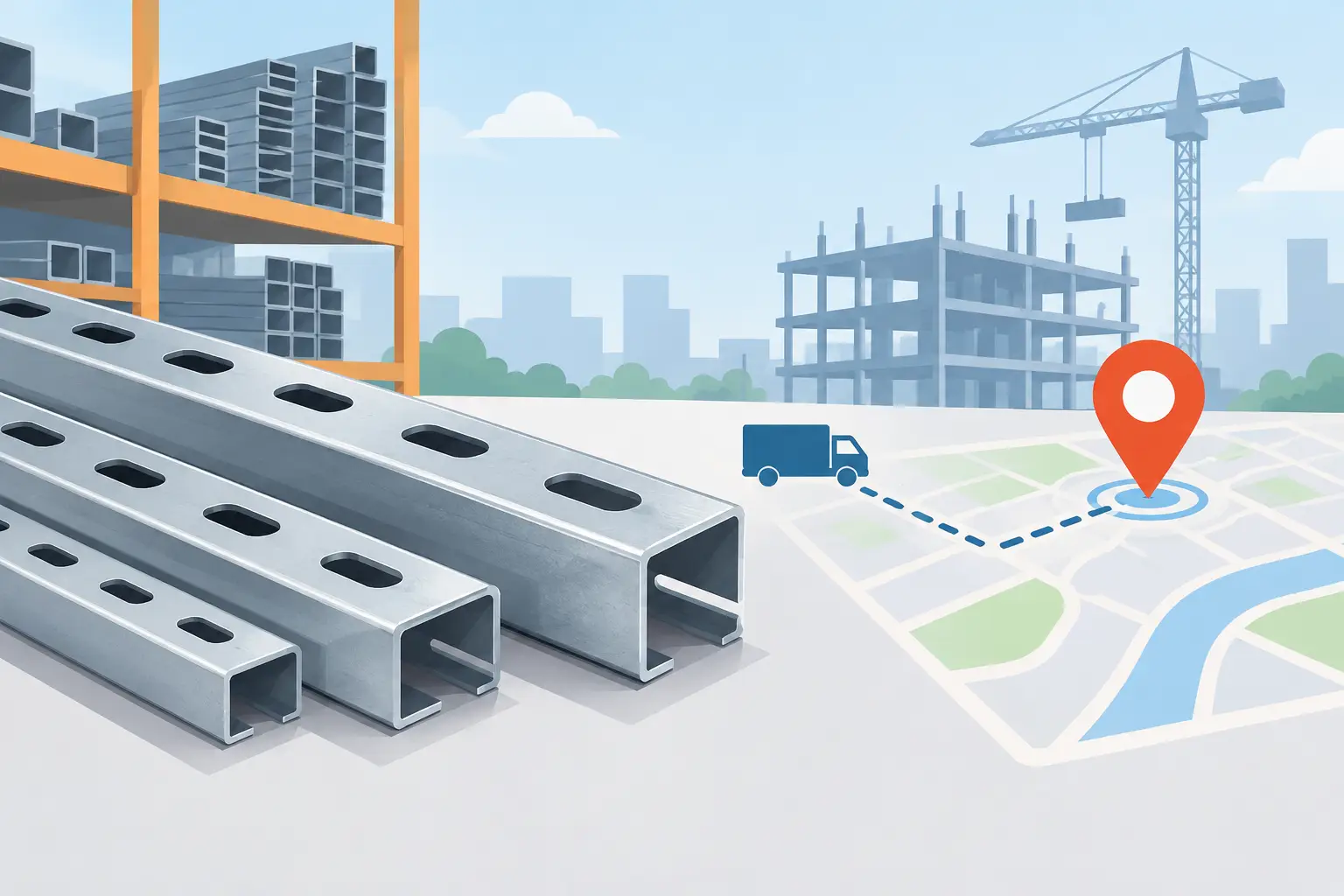
When a jobsite, plant expansion, or equipment build needs support hardware quickly, searching for uni strut closest to me is usually about more than distance. Buyers need the correct channel profile, compatible fittings, reliable load performance, and enough inventory or production capacity to keep installation moving. A supplier may be nearby, but if it cannot provide the required gauge, finish, accessories, or repeatable availability, proximity does little to protect the schedule.
For contractors, OEMs, distributors, and procurement teams, the right source is one that combines practical supply support with manufacturing discipline. That means clear specifications, consistent quality control, and the ability to provide standard components alongside custom fabricated hardware when the application demands it.
What to Check Before Choosing Uni Strut Closest to Me
Uni strut is often used as a broad description for metal framing channel and compatible support-system components. The system may support electrical conduit, cable tray, HVAC equipment, pipe, solar structures, machinery guards, utility racks, and architectural or industrial framing. Although the concept is straightforward, channel systems are not interchangeable in every detail.
Start with the channel dimensions and profile required for the installation. Standard shallow and deep channels, solid-back channels, slotted channels, and back-to-back configurations serve different load and mounting needs. A field team replacing an existing section must confirm width, depth, slot pattern, hole spacing, and channel lip geometry before ordering. Even a small mismatch can prevent spring nuts, brackets, clamps, or post bases from seating correctly.
Material and finish are equally significant. Pre-galvanized steel can be appropriate for many indoor applications. Hot-dip galvanized steel provides increased protection for outdoor, damp, and corrosive environments. Stainless steel is often selected for food processing, chemical exposure, coastal installations, and marine work, while aluminum may be preferred where low weight or corrosion resistance is central to the design. The best choice depends on service environment, expected load, maintenance access, and project specifications.
A nearby distributor can be the fastest option for emergency quantities of common sizes. For larger releases, repeat programs, specialized finishes, or nonstandard channel lengths, a manufacturing partner may provide better control of the total requirement. The practical question is not simply who has a piece of channel on a shelf. It is who can support the full bill of materials without introducing fitment or quality risk.
Build the System, Not Just the Channel
Channel is only one part of a strut support assembly. Projects frequently require brackets, angle fittings, beam clamps, pipe clamps, spring nuts, threaded rods, washers, bolts, post bases, and custom connection plates. Sourcing these parts from separate vendors can create avoidable problems: inconsistent coatings, uncertain compatibility, incomplete shipments, and additional receiving work.
A more efficient purchasing approach is to review the entire assembly at the same time. Confirm the required channel lengths, connection locations, support spacing, clamp sizes, fastener thread types, finish requirements, and any application-specific hardware. This makes it easier to identify missing components before materials reach the site or production line.
For example, an HVAC support frame may require slotted channel, 90-degree fittings, concrete anchors, pipe clamps, threaded rod, and vibration-control elements. An electrical support project may need channel, trapeze brackets, rod couplers, beam clamps, and cable-management hardware. Each item affects the installation sequence. A supplier that understands support-system assemblies can help reduce fragmented purchasing and simplify material planning.
Compatibility should be verified rather than assumed. Many buyers specify unistrut-compatible systems because existing installation practices and accessory selections are based on that format. Compatible components must still be evaluated against the exact profile and dimensional requirements of the project. Engineering drawings, samples, or documented dimensions provide a stronger basis for purchasing than a product description alone.
Load Requirements Need More Than a Quick Estimate
Support hardware is often treated as a commodity until the assembly carries pipe, ductwork, conduit, equipment, or dynamic loads. Channel capacity depends on profile geometry, material thickness, span, support spacing, connection method, and the direction of loading. The fastener and anchoring method may become the limiting factor before the channel itself does.
Procurement teams should provide available load data, installation orientation, span information, and environmental conditions early in the sourcing process. Engineers should also identify whether the system will carry static loads, vibration, thermal movement, wind exposure, or seismic considerations. This information helps ensure that the selected channel and fittings suit the intended service rather than merely matching a familiar part number.
When Standard Stock Is Not Enough
Standard strut products solve many applications, but they do not solve every one. OEM assemblies and infrastructure projects may need special hole patterns, tighter length tolerances, welded brackets, formed connection plates, reinforcement details, or custom finishes. Trying to force an unusual design into off-the-shelf hardware can increase field labor and create unnecessary connections.
Custom fabrication is especially useful when repeatability matters. A manufacturer can cut, punch, bend, weld, form, assemble, and finish components to a controlled drawing revision. This approach is valuable for equipment manufacturers that need identical support assemblies across multiple units, as well as contractors managing a large, phased installation.
The trade-off is lead time. Standard material can often move faster when quantities are small and specifications are common. Custom work requires drawing review, tooling or setup planning, material procurement, production scheduling, and inspection. The most reliable way to protect the timeline is to separate immediate site needs from planned project requirements. Buy standard emergency quantities where appropriate, then establish a controlled production plan for recurring or custom components.
Questions to Ask a Local or Regional Supplier
Before placing an order, request enough technical and commercial information to make the choice defensible. A capable supplier should be able to address these questions clearly:
- What are the channel dimensions, material thickness, slot configuration, and available lengths?
- Which fittings, nuts, clamps, and fasteners are compatible with the specified channel profile?
- What finish is supplied, and is it appropriate for the operating environment?
- Can the supplier provide mill documentation, material details, or inspection information when required?
- What quantities are available now, and what are the confirmed lead times for balance quantities?
- Can custom brackets, punched parts, or welded fabrications be produced to drawing?
- How will products be packed, labeled, and shipped to prevent damage or receiving confusion?
These questions are not administrative details. They expose whether a source can support a project after the purchase order is issued. A low unit price has limited value if hardware arrives incomplete, incorrectly finished, or late enough to affect installation labor.
Consider Total Supply Reliability, Not Just Driving Distance
For buyers in Vaughan, the GTA, and across Ontario, local access can reduce transit time and make inspections or urgent pickups easier. That advantage is real for active construction sites and maintenance work. Yet regional supply should also be measured against broader manufacturing capability, inventory depth, export readiness, and the ability to maintain quality across repeat orders.
A source with disciplined fabrication processes can support channel systems beyond standard catalog parts. Metallix Exports manufactures precision sheet metal components and unistrut-compatible support hardware for industrial and construction applications, including brackets, clamps, post bases, channels, and custom fabricated assemblies. For buyers managing complex requirements, the value is not merely a local shipment point. It is access to a production partner that can align standard hardware with application-specific parts.
Clear communication remains essential. Provide drawings where custom work is involved, specify the relevant material grade and finish, identify critical dimensions, and state delivery requirements early. If a specification is incomplete, a reliable supplier should raise the question before production rather than making assumptions that become field problems.
The best answer to a search for uni strut closest to me is the source that can put the correct system in your hands when the work needs it - with components that fit, finishes that last, and production support that remains dependable as the project grows.